How the lambing calculator works
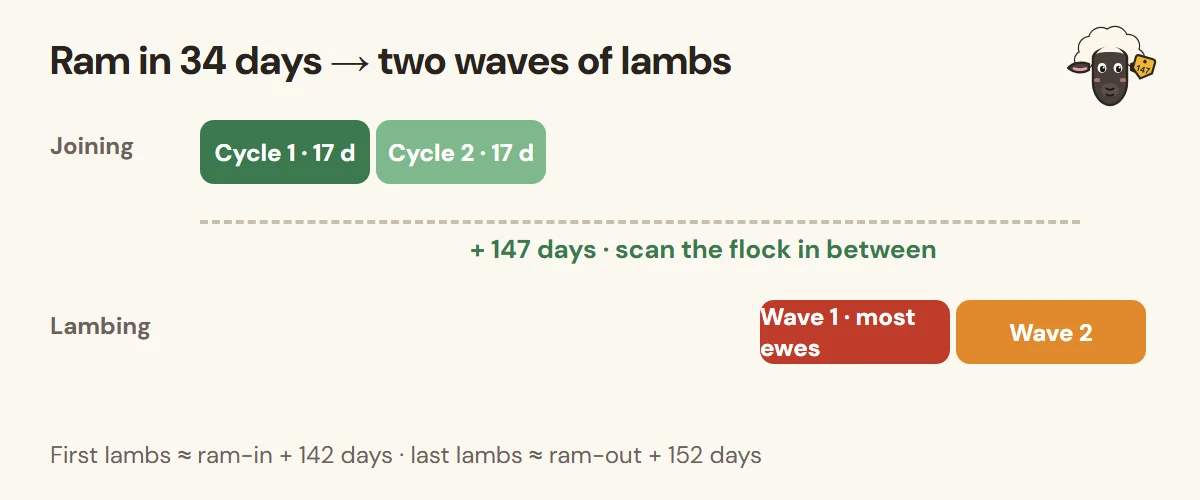
A ewe can only get pregnant while she is in heat, and ewes come into heat about every 17 days. So the lambing calculator splits your joining period into heat cycles and adds the gestation length to each one:
- First lambs = ram-in date + 142 days (the early end of normal).
- Last lambs = ram-out date + 152 days.
- Cycle groups: ewes that take in the first 17 days lamb as the first group, ewes that took on their second heat lamb about 17 days later, and so on.
Pick a breed and the numbers change to match. Open More options to plan backwards from the day you want your first lambs, or to get the dates to change the raddle crayon.
How long should the ram stay in?
Most shepherds leave the ram in for two cycles (34 days) or three cycles (51 days). Two cycles gives a tight lambing season of about six weeks, which makes night checks, feeding and selling lambs as a group much easier. A third cycle catches the odd ewe that missed, but it stretches lambing by another two and a half weeks.
If the ram stays in for more than about 60 days, the calculator warns you: lambing will drag on for months, and the late lambs will be small next to the early ones.
A fit ram can cover 30–50 mature ewes in a joining. For ewe lambs or a young ram, plan on about half that, and check his raddle marks every few days.
When to put the ram in
Count back from when you want lambs. Lambs come about five months after the ram goes in:
| Ram in… | Bred on the 1st → lambs | Bred on the 15th → lambs | Lambing month |
|---|---|---|---|
| January | May 28 | Jun 11 | June |
| February | Jun 28 | Jul 12 | July |
| March | Jul 26 | Aug 9 | August |
| April | Aug 26 | Sep 9 | September |
| May | Sep 25 | Oct 9 | October |
| June | Oct 26 | Nov 9 | November |
| July | Nov 25 | Dec 9 | December |
| August | Dec 26 | Jan 9 | January |
| September | Jan 26 | Feb 9 | February |
| October | Feb 25 | Mar 11 | March |
| November | Mar 28 | Apr 11 | April |
| December | Apr 27 | May 11 | May |
Think about grass, weather and labour when you pick a date. March and April lambing lines up with spring grass in most of the US, UK and Canada. Earlier lambing (January–February) needs a barn and more feed, but gets lambs to market sooner.
Using raddle crayons to read your lambing dates
A raddle (marking harness or paint on the ram’s brisket) leaves a coloured mark on every ewe he mates. Change the crayon colour every 17 days, light colours first and darker later (for example yellow, green, then red), so the new colour shows over the old one. Then:
- Ewes with only the first colour should all lamb in the first wave.
- Ewes marked in two colours came back into heat, so they will lamb about 17 days later.
- Ewes with no mark at all were not mated and need checking.
Write down the date each ewe is marked and put it into the sheep gestation calculator for her exact lambing date.
When to scan ewes
Pregnancy scanning works best between 45 and 90 days after mating. For a whole flock that means scanning at least 45 days after the ram comes out, but before the first ewes are much past day 90. The calculator works that window out for you. If the joining was long, there may be no single day that suits every ewe, so scan from 45 days after ram-out.
Scanning lets you split the flock by litter size: singles, twins and triplets need different feeding in the last six weeks, and empty ewes can be sold or rebred.
Getting the flock ready for lambing
- 6 weeks before first lambs: step up feeding, twins and triplets first.
- 2–4 weeks before: clostridial booster for the ewes and crutch or shear, as your vet advises.
- 10 days before: jugs ready, lambing kit stocked (gloves, lube, iodine, colostrum, tube feeder, heat lamp), and checks at least twice a day.
Lambing questions
How long after the ram goes in will ewes lamb?
About 147 days, so roughly five months. The first lambs can arrive from about day 142 after the ram goes in.
How long does lambing season last?
About as long as the ram was in, plus ten days. A 34-day joining usually gives a lambing season of about six weeks, with most lambs in the first three weeks.
What is a good lambing percentage?
Lambing percentage is lambs born (or weaned) per 100 ewes joined. Many commercial flocks aim for 150–180% lambs born; prolific breeds can go well over 200%.
Can I use this lambing calculator for goats?
Goats carry about three days longer than sheep. Type 150 into “Your own gestation length” under More options and it works for kidding dates too. A dedicated goat calculator is coming soon.